Gifts for Music Producers 2026: 25 Ideas by Budget
The best gift for a music producer who already has a home studio is the Universal Audio Apollo Twin X, because it is the interface they would buy themselves in a good year and it changes every recording they make. For a smaller budget, a pair of foam corner bass traps changes what they hear more than any plugin, and a Rode PSA1+ boom arm or Beyerdynamic DT 770 PRO headphones fix problems they have stopped noticing.
Definition: A home studio gift that works is one that fixes a failure the recipient has already had, a clipped take, a boomy mix, click bleed on a vocal, rather than one that adds a feature they did not ask for.
Gifts for someone who records at home go wrong in two ways. Either they duplicate something already on the desk, or they add a feature nobody asked for while the real problem, the boomy low end, the click bleeding into the vocal take, the mic on a desk stand picking up every keystroke, keeps happening. This page is built on the order the rest of the site uses: fix the room and the failures first, then buy capability. So the mid tier leads with monitors, a tracking headphone and bass traps rather than a plugin bundle, and the big gift is the Universal Audio Apollo Twin X DUO USB Heritage Edition , because it is the one piece of gear a producer will not already own twice and the one they would buy themselves in a good year.
Every product link on this page is an affiliate link. We earn a commission if you buy, at no extra cost to you, and it does not change what is on the list. Full statement on the affiliate disclosure page.
Quick picks by budget
The top picks in each budget tier, biggest gift first. Each tier has its own section below with the full comparison.
| Budget | Pick | Best for |
|---|---|---|
| Splurge | Universal Audio Apollo Twin X DUO USB Heritage Edition | Two Unison preamps that model a Neve or an API at the input |
| Splurge | RME Babyface Pro FS | The other answer at the same price |
| Under $400 | JBL 305P MkII, pair | The five-inch pair with the widest sweet spot in its class |
| Under $400 | Shure MV7+ | A dynamic with USB and XLR on the same body, so it works on a laptop today |
| Under $50 | Audio-Technica ATH-M20x | The closed-back tracking headphone that costs less than a dinner |
| Under $50 | Auralex MoPAD monitor isolation pads, 2 pair | Isolation pads that stop the desk resonating with the monitors |
| Under $20 (stocking stuffers) | NEEWER microphone pop filter | A double-mesh pop filter on a gooseneck |
| Under $20 (stocking stuffers) | VANDESAIL XLR cables, 10 ft, 2 pack | Two balanced 10 ft XLR cables |
Shipping note: Order early for the holidays; popular items sell out around Black Friday. Studio monitors, keyboards and acoustic panels ship in large boxes and can take longer to arrive, so leave extra time for those.
How do you buy for a producer without guessing wrong?
Three questions settle almost everything. What do they record? A singer or a podcaster wants a microphone and a stand; a producer working in the box wants a controller, an interface and monitors; a guitarist wants an interface with an instrument input and a good tracking headphone. Is the room treated? A condenser microphone and big monitors are wonderful in a treated room and a mistake in a bare one, and the room treatment guide explains why. If you do not know, buy the dynamic microphone and the bass traps. What already goes wrong? If you have heard them complain about click bleed, the headphone tier is the answer. If it is mixes that fall apart in the car, monitors or treatment. If it is latency, the interface.
The gift I would have wanted in my first year of recording at home was not a better microphone. It was two bass traps and a real stand. The microphone I had was fine; the room was lying to me about the low end, and the condenser on a desk stand was recording my keyboard. Both problems cost under $150 to fix and I put up with them for two years because nobody buys treatment for themselves.
One number decides most studio gifts, and it is the room. The room mode calculator tells you which frequencies a specific room piles up, the monitor size by room size chart says whether eight-inch speakers belong in it, and the treatment calculator sizes what it needs. Three numbers, and every big gift below depends on at least one of them.
The big gift: an interface, a microphone or monitors, over $400
Six items, each a category-defining purchase. Two are interfaces at the same price with different philosophies, two are microphones for opposite rooms, one is a pair of monitors and one is a keyboard controller. The table sorts them by the kind of recipient each suits, and the one big gift finder walks the decision in more depth if this does not settle it.
| Gift | Right for | Check before buying |
|---|---|---|
| Universal Audio Apollo Twin X DUO USB Heritage Edition | A producer on a starter interface who mixes in the box | USB-C. Check the computer meets the UAD requirements. |
| RME Babyface Pro FS | A producer who tracks on a laptop and wants it bulletproof | USB. No on-board plugins, and that is the point. |
| Neumann TLM 102 | A singer or songwriter in a treated room | Condenser. In an untreated room, buy the RE20 instead. |
| Yamaha HS8, pair | A producer mixing in a room over about 150 sq ft | Check the monitor size chart. Fives for a small room. |
| Native Instruments Komplete Kontrol S49 MK3 | A producer who writes on a two-octave controller | Confirm they use Komplete or Kontakt; the integration is the value. |
| Electro-Voice RE20 | A podcaster or vocalist in an untreated room | Dynamic, needs a lot of gain. Pair with a Cloudlifter on a weak preamp. |
The two interfaces are the same decision with different answers. The Universal Audio Apollo Twin X DUO USB Heritage Edition puts console-modelled preamps and a plugin processor in the box, which suits a producer who mixes in the box and wants the analogue front end without the rack. The RME Babyface Pro FS does none of that and instead has the lowest latency drivers in the business and converters that working engineers keep for a decade. The interface roundup and the interface chooser guide lay out which one suits which recipient, and the USB versus Thunderbolt comparison covers the one compatibility question that matters.
The two microphones are the two rooms. The Neumann TLM 102 is a condenser and hears everything, which is what you want in a treated space and not in a bare bedroom. The Electro-Voice RE20 is a dynamic that ignores the room, and the untreated rooms roundup is where it wins. The condenser versus dynamic comparison is the page to read before buying either, and the vocal microphone roundup ranks the field. The Yamaha HS8, pair pair is the one item here that depends on a number you can check: the monitor size chart says whether the recipient's room is big enough for eights, and the HS8 review is honest about who should not buy them.

Universal Audio Apollo Twin X DUO USB Heritage Edition
Two Unison preamps that model a Neve or an API at the input, UAD plugins that run on the box, and near-zero latency monitoring. For a producer working on a Scarlett who has started to hear its ceiling. The interface they would buy themselves in a good year.
Check price
RME Babyface Pro FS
The other answer at the same price: the lowest-latency drivers in the business and converters that have stayed on the mobile rigs of working engineers for a decade. For a producer who tracks on a laptop and wants it to just work, every session, for years.
Check price
Neumann TLM 102
A Neumann for a home room: a large-diaphragm condenser in a small body that flatters a voice without the harshness cheaper condensers add. For the singer or songwriter whose current mic is the thing holding the recordings back.
Check price
Yamaha HS8, pair
Eight-inch monitors that tell the truth, which is why they are in so many rooms. For a producer mixing on five-inch speakers in a room big enough for eights. Check the room size before buying; the chart on this site does it in one line.
Check price
Native Instruments Komplete Kontrol S49 MK3
Forty-nine semi-weighted keys with the light guide and the browser that makes a plugin library playable without a mouse. For a producer who writes on a two-octave controller and is tired of it.
Check price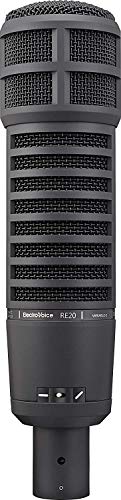
Electro-Voice RE20
The broadcast dynamic that ignores the room. For a podcaster or a vocalist recording in an untreated space, it is the microphone that makes the room stop mattering, and it lasts a lifetime.
Check priceThe mid tier: $100 to $400
This is where most successful studio gifts land, because every item here fixes a specific failure the recipient has already had. Monitors for someone mixing on headphones, a dynamic with USB and XLR for a podcaster, the interface most home studios run on, tracking headphones that do not bleed, a condenser that flatters a voice, the first two bass traps, and the boom arm that stays put. The intermediate studio build is the complete kit most of these come from.
| Gift | Right for | Check before buying |
|---|---|---|
| JBL 305P MkII, pair | A producer mixing on headphones or computer speakers | Needs balanced TRS cables and, ideally, isolation pads. |
| Shure MV7+ | A podcaster, streamer or vocalist in a bare room | USB and XLR. Works on a laptop today, an interface later. |
| Focusrite Scarlett 2i2 (4th Gen) | Anyone still recording into a USB mic or a laptop | Two inputs. Check they do not already own a 4th Gen. |
| Beyerdynamic DT 770 PRO, 80 ohm | A singer whose takes have click bleed | 80 ohm version. Any interface drives it. |
| Rode NT1 Signature Series (with stand) | A vocalist in a treated room | Condenser. Ships with shock mount and pop filter. |
| Mybecca foam corner bass traps, 12 x 12 x 24 in, pack of 2 | Every producer with an untreated room | Two traps. The front corners first. |
| Rode PSA1+ boom arm, with XLR cable | A podcaster working around a desk stand | Clamps to a desk edge. Check the desk has one. |
The Mybecca foam corner bass traps, 12 x 12 x 24 in, pack of 2 pair deserves the explanation, because it is the item on this page most likely to change how the recipient hears. Low frequencies pile up in the corners of every rectangular room, so a mix that sounds fine at the desk has too little bass everywhere else; two traps in the front corners are the first purchase that fixes it, and the treatment roundup covers what comes next. The Beyerdynamic DT 770 PRO, 80 ohm is the other quiet winner: closed-back, almost no bleed, and the tracking headphones roundup explains why the 80 ohm version is the one to give. For the monitors, the monitor positioning guide and the speaker placement calculator are the two pages to print and put in the box.

JBL 305P MkII, pair
The five-inch pair with the widest sweet spot in its class. For a producer still mixing on headphones or on a pair of computer speakers, this is the upgrade that changes what they can hear.
Check price
Shure MV7+
A dynamic with USB and XLR on the same body, so it works on a laptop today and on an interface later. For a podcaster or a streamer, or anyone recording voice in a room that has not been treated.
Check price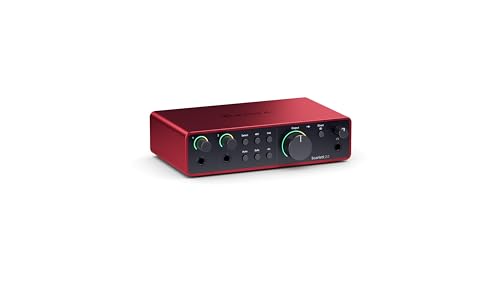
Focusrite Scarlett 2i2 (4th Gen)
The interface most home studios run on, in its fourth generation with Air mode and auto-gain. For anyone recording into a laptop microphone or a USB mic who is ready for the real thing.
Check price
Beyerdynamic DT 770 PRO, 80 ohm
Closed-back tracking headphones with almost no bleed, in the 80 ohm version that any interface can drive. For a singer whose vocal takes have click track leaking into them.
Check price
Rode NT1 Signature Series (with stand)
A quiet, flattering large-diaphragm condenser that ships with the shock mount and pop filter. For a treated room, this is the vocal mic that makes a $200 recording sound like a $2,000 one.
Check price
Mybecca foam corner bass traps, 12 x 12 x 24 in, pack of 2
A pair of corner bass traps. The first treatment purchase that changes what a producer hears, because the corners are where the low end piles up. Two in the front corners is the start of every treated room.
Check price
Rode PSA1+ boom arm, with XLR cable
The boom arm that stays where it is put, with the cable already inside it. For a podcaster or a streamer working around a desk stand that keeps drifting into the shot.
Check priceUnder $50: what gets used every session
Below $50 the gifts stop being decisions and start being the parts the studio is missing. All six fit any setup. The full budget list with eighteen items and the reasoning for each is on home studio gifts under $50; these six are the ones that earn their place on a flagship page.
| Gift | Right for | Check before buying |
|---|---|---|
| Audio-Technica ATH-M20x | A second performer, a guest, or a spare pair | Closed-back. Universal. |
| Auralex MoPAD monitor isolation pads, 2 pair | Anyone with monitors on a desk | Fits five to eight inch monitors. |
| On-Stage MS7701B euro boom stand | A condenser owner using a desk stand | Standard 5/8 inch thread. Universal. |
| Shock mount | A condenser that came without one | Check the microphone body diameter. |
| AKG K240 Studio | A producer who mixes on closed-backs | Semi-open. Not for tracking with a live mic. |
| Mixing Secrets for the Small Studio (Mike Senior) | A producer whose mixes fall apart in the car | The Focal Press edition. Universal. |

Audio-Technica ATH-M20x
The closed-back tracking headphone that costs less than a dinner and works on every interface. For a second performer, a guest, or a producer who has one good pair and needs a spare.
Check price
Auralex MoPAD monitor isolation pads, 2 pair
Isolation pads that stop the desk resonating with the monitors. The cheapest fix for boomy low end on a desktop pair, and the one most people skip.
Check price
On-Stage MS7701B euro boom stand
A real boom stand for a real microphone. A condenser on a desk stand picks up every keystroke; this puts it where the voice is.
Check price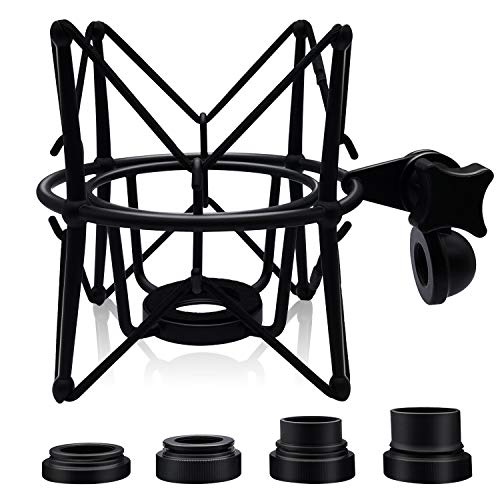
Shock mount
For a condenser that came without one. Isolates the capsule from the stand, which is where floor and desk noise enters.
Check price
AKG K240 Studio
The semi-open studio classic, for a producer who mixes on closed-backs and wants to hear the reverb tails. The most headphone available for under $50.
Check price
Mixing Secrets for the Small Studio (Mike Senior)
The book working engineers recommend for small rooms, which is exactly what a home studio is. For a producer whose mixes fall apart in the car.
Check priceStocking stuffers under $20
Every item here fits every studio and every one solves a problem that finds every producer. If you are adding to a bigger gift: a pop filter with any microphone, TRS cables with any monitors, a headphone extension with any headphones. The signal flow guide shows where each cable on this list goes, and the vocal recording guide is blunt about why the pop filter is not optional.
| Gift | Right for | Check before buying |
|---|---|---|
| NEEWER microphone pop filter | Anyone who records voice | Gooseneck clamp. Fits any stand. |
| VANDESAIL XLR cables, 10 ft, 2 pack | Everyone with an interface | Two 10 ft cables. Universal. |
| Tisino 1/4 inch TRS balanced cables, pair | Anyone with monitors | TRS both ends. Check the monitor input. |
| Pig Hog 1/4 inch headphone extension, 10 ft | Anyone who records performers | 1/4 inch. Add the adapters for 3.5 mm headphones. |
| Foam microphone windscreens, 5 pack | Handheld dynamic owners | Fits SM58-sized heads. |
| VCE 3.5 mm to 1/4 inch headphone adapters, 2 pack | Everyone | Two adapters, 3.5 mm to 1/4 inch. |

NEEWER microphone pop filter
A double-mesh pop filter on a gooseneck. Plosives are the one vocal problem no plugin removes, and this stops them at the source.
Check price
VANDESAIL XLR cables, 10 ft, 2 pack
Two balanced 10 ft XLR cables. Every studio is one cable short, permanently.
Check price
Tisino 1/4 inch TRS balanced cables, pair
Balanced monitor cables. Most budget monitors ship with unbalanced ones, and that is where the hum comes from.
Check price
Pig Hog 1/4 inch headphone extension, 10 ft
A 10 ft headphone extension lets a performer stand where the mic needs them, not where the cable reaches.
Check price
Foam microphone windscreens, 5 pack
Five foam windscreens for handheld dynamics. Tames breath noise on an SM58 or a PodMic for a few dollars.
Check price
VCE 3.5 mm to 1/4 inch headphone adapters, 2 pack
Two 3.5 mm to 1/4 inch adapters, because the one they own is never where they left it.
Check priceWhat to check before buying any of these
The room, for monitors and condensers. Big monitors in a small room and a condenser in a bare one are the two studio gifts that go back. The monitor size chart settles the first in one line and the condenser versus dynamic comparison settles the second.
Gain, for dynamics. The RE20 and the SM7B class of microphones need more preamp gain than a starter interface comfortably supplies. The gain staging calculator checks whether the recipient's interface can drive the microphone you are considering, and if it cannot, an in-line booster from the under $50 list fixes it.
Impedance, for headphones. The DT 770 PRO comes in three versions and only the 80 ohm one is a safe gift for an interface headphone output. The mixing headphones roundup and the open versus closed comparison explain the rest.
The return window. An interface or a microphone bought early in the gift season can fall outside a standard return window by the time it is opened, so check the extended holiday returns policy on the listing before ordering a big item in advance.
Matching the gift to how they record
A beginner recording their first songs wants the interface, the tracking headphones and the dynamic microphone, in that order, which is the beginner studio build. A producer who has been at it a year wants monitors, bass traps and a condenser, which is the intermediate build. A working producer wants the Apollo or the Babyface, the Neumann and the eights, which is the expert build. A podcaster wants the RE20 or the MV7+, the boom arm and the pop filter, and the podcast recording guide is the page to put in the box. If you know which of those describes the recipient, the right tier follows directly, and if you do not, the gift finder asks the questions that sort it out.
Frequently asked questions
What is the best gift for a music producer who already has a home studio?
Something that fixes a problem they have stopped noticing. A pair of corner bass traps changes what they hear more than any plugin. Closed-back tracking headphones stop click bleed on vocal takes. A real boom stand gets a condenser off the desk. If the budget is bigger, an Apollo Twin X or an RME Babyface is the interface they would buy themselves in a good year, and a Neumann TLM 102 is the microphone.
Is an audio interface a safe gift, or is it too personal a choice?
It is safe at the entry level and a considered choice above it. A Scarlett 2i2 suits almost anyone recording one or two sources at once. Above that, the choice depends on how many microphones they record simultaneously, whether they want on-board plugins, and whether the computer is USB or Thunderbolt. Find out what they have now, and use the interface chooser guide on this site to match the upgrade to the way they actually work.
Should I buy studio monitors as a gift without knowing the room?
Know the room first. A pair of eight-inch monitors in a small bedroom produces low end the room cannot handle, and a pair of fives in a large room runs out of headroom. The monitor size by room size chart on this site matches speaker size to floor area in one line, and the speaker placement calculator shows where they should go once they arrive. Five-inch pairs are the safe default for most home rooms.
Which microphone is the safest gift for someone who records vocals at home?
A dynamic if the room is untreated, a condenser if it is treated. A dynamic like the Electro-Voice RE20 or the Shure MV7+ rejects the room, so a bedroom recording sounds like the voice rather than the bedroom. A condenser like the Rode NT1 or the Neumann TLM 102 hears everything, which is wonderful in a treated room and unforgiving in a bare one. If in doubt, buy the dynamic.
Are acoustic treatment panels a good gift?
The best one under $150, and the one nobody buys for themselves. Two corner bass traps are the first purchase that changes what a producer hears, because low frequencies pile up in the corners of every rectangular room. Broadband panels at the first reflection points come next. The acoustic treatment calculator on this site works out how much a specific room needs, and the treatment guide explains the order to install it.
What should I add to a big gift like an interface or a microphone?
For an interface, a pair of balanced TRS cables and a headphone extension. For a condenser microphone, a boom stand, a shock mount and a pop filter, because a condenser on a desk stand picks up every keystroke and a plosive cannot be fixed later. For monitors, a pair of isolation pads. Each of those is under $50 and turns the big gift into something that works on the day rather than after a second order.