Best Vocal Microphone for a Home Studio (Six Condensers Compared)
The best vocal microphone for a home studio is the Audio-Technica AT2035 at $159.00: a large diaphragm condenser with low self noise, a switchable 80 Hz high pass filter and a 10 dB pad. The high pass is the control you use daily, because it removes rumble and proximity buildup at the source. Above about $300 the room becomes the limiting factor rather than the microphone, and the Neumann TLM 102 at $799.00 only earns its price in a treated space.
Definition: A vocal microphone for a home studio is a large diaphragm cardioid condenser, chosen for low self noise and a usable high pass filter rather than for a flattering frequency response, because tone can be shaped later and captured room noise cannot be removed.
The best vocal microphone for a home studio is the Audio-Technica AT2035 at $159.00, and it is not a compromise pick. A large diaphragm condenser with low self noise, a switchable 80 Hz high pass and a 10 dB pad covers the actual job, and the high pass is the control you reach for on nearly every session. Above about $300 the thing limiting your vocal recordings stops being the capsule and starts being the room, which no microphone purchase fixes.
That claim deserves the arithmetic behind it. A condenser two feet from a singer in an untreated bedroom is capturing the singer plus every reflection off the wall behind them, arriving a few milliseconds later and comb filtering the result. Spending $640 more on a Neumann TLM 102 captures that same interference pattern in higher resolution. Spending $640 on absorption removes it.
What makes a microphone good for vocals?
Four specifications, and only two of them are about sound.
- Self noise, published as an A-weighted figure in dB SPL. It is the hiss the electronics produce with no sound present. On a loud chorus it is irrelevant. On a whispered vocal or a fingerpicked guitar it is the difference between a usable take and a hissy one.
- Sensitivity, in millivolts per pascal. A typical large diaphragm condenser sits around 22 mV/Pa and needs about 35 to 40 dB of preamp gain. That is comfortably within reach of any interface, which is the main practical reason condensers are easier to use at home than low-output dynamics.
- A high pass filter switch. The most useful control on the microphone body. Rolling off at 80 Hz at the capsule removes footfall, traffic rumble and proximity buildup before they hit the preamp, instead of removing them later with EQ that also thins the voice.
- A pad. Usually 10 dB. It lets a loud singer work close without overloading the capsule electronics, and it turns a vocal microphone into a usable guitar amp microphone.
Frequency response is deliberately last on that list. Every microphone here is broadly flat with a presence lift somewhere between 5 and 12 kHz, and the differences between them are far smaller than the difference between two singers or two positions in a room.
Which vocal microphone should you buy?
Three tiers. The beginner tier contains the overall winner, which is the honest outcome rather than a trick: at $159 the AT2035 does the job and the money saved buys treatment. The intermediate tier is four genuinely different voices at similar prices. The expert tier is a ceiling most readers should not reach for, and the section below the cards explains why.
Vocal microphone picks, beginner to expert

Audio-Technica AT2035
A large diaphragm condenser with low self noise, a switchable 80 Hz roll-off and a 10 dB pad. The roll-off is the control you reach for daily, because it removes rumble and proximity buildup at the source rather than with EQ that also removes things you wanted.
Best for: The first serious vocal microphone in a home room.
Check price
Rode NT1 Signature Series (with stand)
Rode publish a very low self-noise figure for the NT1 line, and that number is the whole reason to care: a quiet microphone lets you record a quiet source without the room floor coming up with it. This listing includes a stand mount.
Best for: Soft singers, spoken word and anything recorded at a distance.
Check price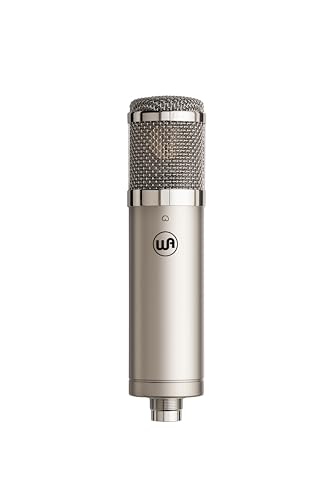
Warm Audio WA-47jr SE
A FET take on a classic large diaphragm design with a deliberately coloured midrange, plus multiple polar patterns. It is not neutral and does not pretend to be, which is exactly what some voices want and exactly what a neutral capsule cannot give them.
Best for: A thin or bright voice that needs weight added at the capsule.
Check price
Lewitt LCT 440 PURE
Lewitt built the LCT 440 PURE around a very low noise floor and a response that does not editorialise. It is the microphone to buy when you want the recording to sound like the singer rather than like a microphone with an opinion.
Best for: Anyone who mixes their own vocals and wants to make the tonal decisions later.
Check price
sE Electronics sE2200 Vintage Edition
A gentle presence lift and a smooth top end that suits pop and rock vocals without needing much EQ afterwards. It includes a pad and roll-off, and the multi-pattern capability widens what else it can do.
Best for: Pop and rock vocals where a finished sound out of the box is the goal.
Check price
Neumann TLM 102
Neumann capsule and Neumann build, with a high SPL rating and a gentle presence lift above 6 kHz. This is the point where the microphone stops being the limiting factor in the chain and the room becomes the entire problem.
Best for: A treated room and a workflow that is already finished.
Check pricePrices change often, confirm on Amazon. As an Amazon Associate we earn from qualifying purchases.
How do the vocal microphones compare?
Every one of these is a large diaphragm condenser requiring 48 volt phantom power. The columns that change what you can do are the filter, the pad and the pattern.
| Microphone | Price | Patterns | High pass | Pad | Character |
|---|---|---|---|---|---|
| Audio-Technica AT2035 | $159.00 | Cardioid | 80 Hz switch | 10 dB | Neutral, slight presence lift |
| Rode NT1 Signature | $196.00 | Cardioid | None on body | None | Very quiet, gently smooth |
| Warm Audio WA-47jr SE | $199.00 | Three patterns | Switch | 10 dB | Coloured, thick midrange |
| Lewitt LCT 440 PURE | $299.00 | Cardioid | None on body | None | Neutral, very low noise |
| sE Electronics sE2200 VE | $299.00 | Multi-pattern | Switch | Yes | Flattering, smooth top |
| Neumann TLM 102 | $799.00 | Cardioid | None on body | None | Refined, lift above 6 kHz |
Notice that the two most expensive microphones under $300 have no filter and no pad on the body, while the $159 pick has both. That is a deliberate design philosophy rather than an oversight: Lewitt and Rode assume you will filter in the DAW. In a home room with traffic outside and a floor that transmits footfall, filtering at the capsule is the better habit, and it is why the AT2035 wins.
Does the room matter more than the microphone?
Yes, and it is not close. A cardioid microphone six inches from a singer is receiving direct sound plus everything the room sends back. The inverse square law says level drops 6 dB every time distance doubles, so at six inches the direct sound is enormously louder than a reflection off a wall six feet away. Move to two feet, as people do for a natural sound, and that margin shrinks fast.
The reflections that matter arrive within about 20 milliseconds of the direct sound, because your ear fuses those with the original rather than hearing them as echo. What they do instead is comb filter: a delayed copy cancels some frequencies and reinforces others, producing the hollow, phasey quality people describe as "sounding like a bedroom". No EQ fixes that afterward, because the notches are frequency dependent on the geometry and move when the singer moves.
Two 2 inch rigid fiberglass panels , one behind the singer and one behind the microphone, kill most of it. Size the coverage with the acoustic treatment calculator and read how to treat a room for recording for the order of operations. If treatment is genuinely impossible, buy a dynamic instead: the dynamic microphone roundup exists for that case, and condenser versus dynamic settles the choice.
The setup habit that improved my vocal takes most was moving the singer, not the microphone. For years I put the microphone in the best-sounding part of the room and had the singer stand wherever that left them, usually a couple of feet from a bare wall. Turning the whole setup ninety degrees so the singer faced into the long dimension with a panel behind them changed more than any capsule I have owned. The other habit: I record a thirty second test at the real performance level, listen to it in the control position on headphones, and only then set the final gain. A take that sounds fine through the interface's direct monitoring can be full of room you did not notice until it was on a track next to everything else.
What has to go with the microphone?
A microphone alone records nothing. The minimum additional purchases:
- A stand or boom arm. A Rode PSA1+ desk arm at $139.99 decouples the microphone from footfall through the floor and includes an XLR cable. A tripod boom stand at $26.98 is the cheap answer. The stands roundup covers both.
- A shock mount. About $29.99 , and not optional. It isolates the capsule from vibration travelling up the stand, which is a low frequency thump that no filter removes cleanly once printed.
- A pop filter. A dual layer gooseneck type placed about two inches in front of the capsule. A plosive is a burst of moving air hitting the diaphragm, not a loud sound, so it is prevented rather than repaired.
- An XLR cable and 48 volt phantom power, which every interface here supplies. The cable and connector chart covers which cable goes where.
Who should not buy the expert tier?
Do not buy the Neumann TLM 102 at $799.00 for an untreated room. It is a genuinely excellent microphone and it will make your bedroom sound like a better-recorded bedroom. The capsule is more sensitive to detail, which means it is more sensitive to the wall behind you, the laptop fan, the fridge two rooms away and the traffic outside. In an untreated space it can easily produce a worse-sounding vocal than the $159 AT2035, because the AT2035 has a high pass filter and the Neumann does not.
The honest split: the difference between the AT2035 and the TLM 102 is $640.00. That buys four 2 inch panels and two corner traps with money left for a boom arm. Do that first. If, after the room is handled, you still find the microphone is the thing standing between you and the sound in your head, then the TLM 102 is a legitimate purchase and you will know exactly why.
How to record the take once you have it
Set gain from the loudest phrase in the song, not from a spoken test. Aim for peaks around -10 dBFS and roughly -18 dBFS RMS, which is the alignment level matching 0 VU on analogue gear and the target the whole site uses. Twenty four bits gives about 144 dB of theoretical range, so headroom is free and there is no reason to track hot.
The gain staging calculator works out the preamp gain your specific microphone and source need, and how to record vocals at home covers position, pop filter placement, cue mixes and comping in the order you actually do them. For the rest of the chain, the interface roundup and the tracking headphone roundup are the other two purchases that decide whether a vocal take is usable.
Full reviews of the microphones on this page
Each of these goes further than a roundup entry can, with a sourced specification table and the product's real weakness in its own section. The Audio-Technica AT2035 review makes the case that the 80 Hz high pass matters more than the capsule. The Rode NT1 5th Gen review covers what a very low noise floor buys you and when it buys you nothing. The Lewitt LCT 440 PURE review covers the quiet, neutral option that has no switches at all, and the Neumann TLM 102 review covers the ceiling and why the room has to come first.
Frequently asked questions
What is the best vocal microphone for a home studio?
The Audio-Technica AT2035 at $159.00. It is a large diaphragm condenser with low self noise, a switchable 80 Hz high pass and a 10 dB pad, and the high pass is the control you use on nearly every session because it removes rumble and proximity buildup at the source. Above about $300 the room becomes the limiting factor rather than the capsule.
Do I need a condenser or a dynamic microphone for vocals at home?
A condenser if your room has some absorption at the first reflection points, a dynamic if it does not. A condenser puts out around 22 mV per pascal and captures detail, and it captures the room along with the detail. A cardioid dynamic sits nearer 1.1 mV per pascal, is worked at three to four inches, and rejects reflections in a way no condenser can.
How much preamp gain does a vocal condenser need?
About 35 to 40 dB for a normal sung vocal at six to eight inches, which every interface on the market supplies comfortably. This is the main practical advantage of a condenser over a dynamic: an SM7B at the same distance needs 60 to 65 dB of clean gain, and budget preamps commonly stop at 50 to 56 dB and hiss before they get there.
How far should a singer be from the microphone?
Six to eight inches for most pop and rock vocals, with a pop filter about two inches in front of the capsule. Closer adds proximity effect, a low frequency boost from a directional microphone worked close, which can be flattering or muddy depending on the voice. Further back captures more room, which is only a good idea if the room is worth capturing.
Does microphone self noise actually matter?
It matters for quiet sources and it is irrelevant for loud ones. Self noise is the hiss the microphone electronics generate with no sound present, published as an A-weighted figure in dB SPL. On a belted chorus at 100 dB SPL nothing under about 20 dB is audible. On fingerpicked guitar or a whispered vocal at 50 dB SPL, the difference between a 12 dB and a 20 dB microphone is plainly there.
What else do I need besides the microphone?
A stand or boom arm, a shock mount, a pop filter, an XLR cable and an interface that supplies 48 volt phantom power. The shock mount and pop filter are not optional accessories: handling noise and plosives are problems you prevent at the source, and neither can be repaired convincingly afterwards. Budget roughly $60 to $170 depending on whether you buy a floor stand or a desk arm.
Working out your own room and signal chain? The Home Studio Build Planner is the paid version of these pages: 8 printable worksheets you fill in with your own numbers, plus the full PDF, $29.